On The Global Waterfront: The Fight To Free The Charleston 5
$17.95
Paperback, 240 pages
ISBN-13: 978-1-58367-163-4
Released: January 2008
Longshoremen stand at the nexus of the global economy, handling nearly every cargo container that enters or leaves any country. Even in the face of the “containerization” of cargo in the 70s and 80s, a development that decimated longshore unions, they have managed to win contracts that provide exceptional benefits and high wages.
On the Global Waterfront tells the story of how longshoremen in South Carolina confronted attempts to wipe out the state’s most powerful black organization. When a Danish shipping company began to shift their transportation to a nonunion firm in 1999, Local 1422 in Charleston, South Carolina, mobilized to protect their hard-won rights. What followed culminated in a protest in which 660 riot police arrayed against fifty dockworkers, a group that grew to 150 before the night was over. Four black and one white longshoreman—subsequently known as the Charleston 5—were held for twenty months under house arrest on trumped-up felony charges of inciting a riot.
Within the politically conservative, racially charged, and religiously fanatic climate of the South, the unassuming local union president, Ken Riley—supported behind the scenes by a militant AFL-CIO staffer—crafted an international, grassroots campaign in defense of the arrested longshoremen. From Australia to Europe to Korea and the entire west coast of the United States, longshoremen threatened to shut down ports jeopardizing billions of dollars in trade per day. Their ultimate success vaulted Riley, and his reform-minded coworkers, to higher leadership in a notoriously corrupt union, and laid the foundation for successful rebuffs in ports around the world.
On the Global Waterfront explores in detail a local conflict and in the process exposes the powers that rule the United States and the global economy. This compelling narrative of a local struggle, a transformed union leader, and a newly energized international worker movement highlights the resounding importance of the international labor movement that is not only still vital, but still capable of stopping global commerce on a dime.
This book tells the remarkable story of five longshoremen prosecuted for defending their livelihood and their unlikely hero, Local 1422 President Ken Riley. It’s a story that demonstrates how race still matters in parts of our country, and how circumstances propel ordinary people to do extraordinary things. On the Global Waterfront: The Fight to Free the Charleston 5 deftly demonstrates that in our global economy, what happens on a South Carolina dock can have ripple effects worldwide. There are lessons contained on these pages from which we must all learn if we are to truly hope for a better future.
On the Global Waterfront: The Fight to Free the Charleston 5 is a narrative of profound significance for the labor movement. It speaks to civil and social rights that affect each and every one of us who are trade unionists as well as consumers in the international marketplace. This book offers a comprehensive understanding of labor’s struggle by chronicling the events of one seemingly insignificant event, the arrest of 5 local, virtually unknown dockworkers; however, its larger impact speaks to where America stands for its people when put on trial in a global courtroom.
This book is destined to be a classic of labor history. The authors tell the story of an historic labor struggle, on the docks of Charleston but with ramifications around the world. They chronicle the voices of workers, cops, lawyers, and politicians in a compelling narrative. The Charleston dockworkers’ battles are, as the authors show us, part of a world-wide conflict, in which the only effective challenge to big business is worker power. I had a cameo role in this struggle, and I am grateful that the authors have put it in perspective. These events are a microcosm of what is going on globally. Teachers of law, history, political science, and economics should assign this book to their students. Everyone who cares about economic justice should read it.
is a professor of anthropology at Pennsylvania State University. Together Erem and Durrenberger recently wrote Class Acts: An Anthropology of Service Workers and Their Union and Anthropology Unbound: A Field Guide to the 21st Century. They are married and live in Pennsylvania.

Publication Date: January 2008
Number of Pages: 240
Paperback ISBN: 9781583671634
Related products
-
![Monthly Review Volume 2, Number 2 (June 1950) [PDF]](data:image/svg+xml,%3Csvg%20xmlns='http://www.w3.org/2000/svg'%20viewBox='0%200%20150%20239'%3E%3C/svg%3E)
Monthly Review Volume 2, Number 2 (June 1950) [PDF]
$10.00 Add to cart -
Monthly Review Volume 1, Number 12 (April 1950) [PDF]
$10.00 Add to cart -
Monthly Review Volume 1, Number 9 (January 1950) [PDF]
$10.00 Add to cart -
![Monthly Review Volume 1, Number 7 (November 1949) [PDF]](data:image/svg+xml,%3Csvg%20xmlns='http://www.w3.org/2000/svg'%20viewBox='0%200%20150%20229'%3E%3C/svg%3E)
Monthly Review Volume 1, Number 7 (November 1949) [PDF]
$10.00 Add to cart -
Monthly Review Volume 1, Number 2 (June 1949) [PDF]
$10.00 Add to cart -

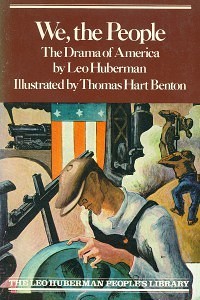
We, the People: The Drama of America
Price range: $15.00 through $18.00 Select options This product has multiple variants. The options may be chosen on the product page
![Monthly Review Volume 2, Number 2 (June 1950) [PDF]](https://monthlyreview.org/wp-content/uploads/2015/09/Monthly Review Volume 2, Number 2 (June 1950) [PDF].jpg)
![Monthly Review Volume 1, Number 12 (April 1950) [PDF]](https://monthlyreview.org/wp-content/uploads/2015/09/Monthly Review Volume 1, Number 12 (April 1950) [PDF].jpg)
![Monthly Review Volume 1, Number 9 (January 1950) [PDF]](https://monthlyreview.org/wp-content/uploads/2015/09/Monthly Review Volume 1, Number 9 (January 1950) [PDF].jpg)
![Monthly Review Volume 1, Number 7 (November 1949) [PDF]](https://monthlyreview.org/wp-content/uploads/2015/09/Monthly Review Volume 1, Number 7 (November 1949) [PDF].jpg)
![Monthly Review Volume 1, Number 2 (June 1949) [PDF]](https://monthlyreview.org/wp-content/uploads/2015/09/Monthly Review Volume 1, Number 2 (June 1949) [PDF].jpg)