Monthly Review Press

heading Contact Us Monthly Review MR Associates Subscribe or Buy Books
   
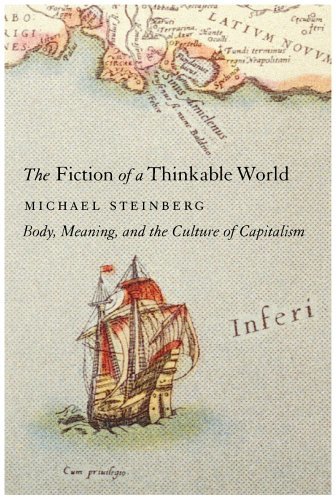
The Fiction of a Thinkable World

E X C E R P T

THE FICTION OF A THINKABLE WORLD

Body, Meaning, and the Culture of Capitalism

by Michael Steinberg

« MRP Home

» Book Description

order book
Receive
a 20%
discount

April 2005

ISBN:
1-58367-115-3
$17.95 paper

224 pp.

Philosophy/Cognitive Science/Politics

Excerpted from Chapter 9—
Politics Without Goals

Dreaming has always had a political function. It provides a kind of safety valve for the inevitable inconsistencies and sorrows of life. But it also discharges some of the misery caused by that single, all-pervading split on which liberal capitalism rests—the illusion that we can stand aside from social process, that we are self-created or enter our lives with a soul made in some heavenly or sociobiological forgery—which is the very foundation of our economic and social order. With that split comes the eclipse of the communal subject of action and our own powerlessness. Neither art nor the politics of ethnic or sexual identity, which simply replace the specious independence of the individual with the equally false independence of the oppressed as a group, can do anything to relieve this impotent isolation, but they offer to some the illusion or hope of an ultimate reconciliation that makes it easier to bear. For many that promise sustains the myths with which they explain their plight to themselves. Religion still has many adherents, but for today's unbelievers the opiate of choice is theory.

The central legitimating rituals of both representative democracy and market economics base their authority on the separation of the thinking subject, and for that reason they are trapped in the same circularity as the dreams of the discontented. In the voting booth, for example, we leave the world behind. Alone with our conscience, with our dreams of how the world should be, isolated from social pressure—the ballot is secret, after all—and apparently free, we vote from our inmost hearts. The supermarket aisle is the same; the responsible consumer reads the unit prices, the ingredient lists and nutrition charts, and protects herself from the manipulation of unscrupulous advertisers by the information provided and her ability to weigh competing claims rationally.

However useful voting and markets may be for assessing preferences in large groups, they are rituals which do double duty. They appear transparent and value-neutral, mere vehicles that effectuate choices made elsewhere. Liberal theorists of course recognize and decry the manipulation and biases in information that pollute the free and independent choices we think we are making. But politicians cursed with perfect candor and newspapers of godlike detachment would not make us any more independent. Nobody steps outside our world for any purpose. Whether we are in private or in a group certainly affects what we do and think, but one action is no more individual than the other; a lynch mob and the United States Supreme Court are composed of equally social creatures. The benefits of a considered process for collective decision-making are obvious; one would in all cases prefer a court to a throng with torches and a noose. What cannot be shown is that any way of assessing preferences has validity outside its own terms.

Elections and market behavior give us only the current state of a system, not the sum of decisions made elsewhere. They can neither justify their results nor transcend the system in which they operate.

These attempts to ground institutions outside of common life only reproduce the fallacious input/output scheme of mental activity. The voting booth, for example, is the macrocosmic equivalent of the black-box mind of the Standard Cognitive Science Model. We take in information from the news media, campaign leaflets, stump speeches, the internet, and kitchen-table gossip. We output our vote. As we have seen, though, action and perception are not separated, and there is no intervening decision-making process in any mental black box. Perception itself is an intersubjective phenomenon, as Husserl discovered. So there is no private space from which we pass judgment on ourselves or our surroundings; our judgments—which are real ones—emerge as moments in an unending unspoken conversation. Seen this way, the walls of the voting booth dissolve and our decisions appear as the social acts that they are.

But if we cannot dream, think, create, or vote ourselves out of this unhappy world, what can we hope to do by way of criticism or politics? In his early years Marx thought he had discovered the answer. His writings of the 1840s reveal a kind of wager: that the emerging industrial proletariat was creating, at least in potential form, a genuinely postcapitalist (one might say postmodern) form of life. The working class could assume this role because it had been completely cut off from social power. It was totally alienated, totally oppressed, and this class with “radical chains” could therefore embody a standpoint that was an equally total negation of alienation and oppression. Its present-day life was not in itself communism, but what it embodied today would be forged into the life of the future through revolutionary struggle, at once social change and self-change—processes, which the struggle would show to be identical. The proletariat would bring to consciousness the true machinery of history, something that had appeared before only in alienated, mystified form.

This is a theory deeply indebted to Hegel, which is at once its strength and its weakness. In Philosophy and Revolution Stathis Kouvelakis argues that for the Marx of the early 1840s the proletariat was fundamentally a philosophical entity and a vantage point that revealed the contradictions in bourgeois society, not a group of real people whose misery had been discovered by empirical investigation. (Kouvelakis sees the Engels of the same period as a “social-ist,” driven by a concern for the actual conditions of working class life, not unmixed with fear and sexual fascination, to craft a reformed social order in which human needs would be better met.) But Marx's proletariat is more than a mere concept. He needed such an entity to exist in reality instead of theory, because if there were no community that was making present the life of the postcapitalist world there would be no way to project that future simply by thinking. Such a future is literally unimaginable, as Marx explicitly argued in the third of his famous Theses on Feuerbach:

The materialistic teaching on the changing of circumstances and education forgets that the circumstances are changed by men, and it is necessary that the educator himself be educated. This teaching, therefore, is bound to split society into two parts, of which one is superior to the other. The concurrence of changing of the circumstances and of the human activity, or self-changing, can be conceived as revolutionary practice.

Marx's point was that self-change and thinking are neither separate from circumstances and human activity nor epiphenomenal. Both are interwoven with each other and mutually dependent; as Nathan Rotenstreich says, Marx's theory forswears any “first foothold” in one side or the other. These aspects have appeared to be separate only because they had previously been addressed in isolation, either objectively as “actuality [or] sensuousness” or subjectively as “as human sensuous activity, [or] practice.” “Revolutionary” or “practical-critical activity” is the realization of the unity of these two aspects. (“Realize” should here be understood in both senses.)

It should not be necessary to belabor the clear parallels between this theory of the relationship between thinking and activity and the one advanced in these essays. But there are crucial differences as well. Marx's theory supports a critique of the illusion of separate human subjects; he indicts Feuerbach for a position that can contemplate only “single individuals and civil society” instead of “human society or social humanity.” But it adheres to the closely related ideal of conscious transparency, the faith that all human activity can be made rationally knowable. It simply looks to a social process and a future social order instead of to philosophy for the attainment of that rather Hegelian goal. Although Marx, at least in this period, saw the future as a continuous and unpredictable process of revolutionary change—a point Kouvelakis brings out in his magisterial work—he did see the imminent proletarian revolution as the one genuinely transformative act in human history. The revolution would be more than an event in consciousness. It would be the true birth of consciousness; from that point on history would be made knowingly. In other words, conscious rationality, having come into its own, would grasp and henceforth govern all human activity. The celestial light would return.

Hopes such as these could only be disappointed. Marx had achieved only a more plausible form of the same linguistic totalitari- anism that has recurred in the West since the Stoics. The transparency and rational comprehension of human activity that were to result from the proletarian revolution could never have been achieved; such projects for deifying humanity fail not because it is sacrilege to aspire to godhead but because no divine vantage point could ever exist. In the words of Jean-Marie Vincent,

[Marx] overestimated the power of oppressed individuals and groups to throw over cognitive and cultural structures as well as limitations of social practices. This led him to transfigure, virtually to deify, the wage laborer, who even before any process transforming the social relations of labor became the emblematic incarnation of emancipation.

But there was never a working-class revolution in any event, though Lenin and his successors tried to pass off theirs as genuine fulfillments of the Marxian prophecy. In 1848 workers' uprisings spread throughout Western Europe. They were all suppressed. Isolated national revolts, often following defeat in war, kept the revolutionary flame alive for the next seven decades, but by the time a government pledged to Marx's principles achieved lasting power all hint of the self-transforming nature of his early theory had been lost or suppressed—a loss for which Marx, whose response to the failures of 1848 colored his thought for the rest of his life, surely bears some responsibility. It was a difficult argument in any event, and even Engels was unable to grasp the full implications of his friend's work—a failure perhaps exemplified by his decision to remove the words “or self-change” when he first published the Theses on Feuerbach. This watering-down left a hole in the center of what remained of Marxism, which was now presented as “the science of society”—just another exercise in thinking, with the usual claims to be the whole truth.

Nor was the twentieth century any kinder to Marx's hopes, though the disappearance of the Soviet Union, a parody Marxist state simultaneously ludicrous, pathetic, and terrifying, was a net gain to theory if not to world stability. Attempts to fill the hole in the center of “scientific” Marxism with Freudianism or another “science of the soul” failed to retain what was valuable and living in Marx's original vision, and the prospects for revolutionary change have receded year by year. The industrial proletariat in the first world has been vanishing for decades and it still shows no signs of achieving the consciousness Marx and Lukács once imputed to it. Even though much of the misery and poverty of a globalized capitalism has now been exported to the third world the workers of those countries seem farther from Marx's proletariat than their first world predecessors ever were. This may be a triumph of ideological misdirection. We may be expecting a cultural transformation in Africa, Asia, and Latin America that has yet to occur. Or it may be that Marx's underlying model was flawed.

It is tempting to leave such theories behind. We are well done with dreams; they all become nightmares in the daylight. And there is certainly enough to occupy ourselves with in the simple amelioration of the condition of the world. At the very least we ought to try to guarantee that a habitable planet will still be around for our children, their children, and even the shareholders of a capitalist future.

Even this modest achievement is unlikely if we let events follow their own logic. Conditions in the industrialized world are still tolerable and even luxurious for a great many, but this prosperity is increasingly unequal in its distribution and looks more and more tenuous. Worse yet, it leaves out and progressively impoverishes at least half of the world's population: billions of people without clean water, sanitation, work of any sort, education, or health care. In much of Africa and Latin America and parts of Central Asia per capita GNP and living standards have been falling since the 1970s. Even without the demographic disaster of the AIDS pandemic and the unpredictable ravages of climate change many third world countries would be moving toward economic collapse. At the same time the industrialized nations, the United States most of all, are exhausting the world's resources at an accelerating rate. If even a sizable fraction of the third world were to consume the way the United States does global energy supplies would be entirely used up in a few years. The head of the U.N.'s environment program has argued that the ambitious economic goals of the People's Republic of China cannot be achieved simply because they demand more resources for their fulfillment than the earth can supply.

This is a volatile situation. Increasing poverty, disease, and instability in many parts of the world, decreasing resources to support the one-sided prosperity of the industrialized world, major global threats such as climate change and possible technological disasters—the “gray goo” horror some critics of nanotechnology fear—none of these is likely to vanish because of some scientific breakthrough. Technological optimists assume that some unforeseeable invention will appear in time to solve every problem we face. Their more detailed projections look disturbingly like the well-known S. Harris cartoon in which a mathematician's blackboard proof contains a step labeled “then a miracle occurs.” Humanity, it must be admitted, has pulled off a good many miracles. But the challenges we face are so grave that it would be foolhardy to count on them in every instance.

It does not require any sophisticated social theory to grasp these threats. Indeed, it requires some degree of theoretical commitment—to apocalyptic Christianity, for example—to deny it. Nor should an appeal to altruism be needed to garner support for genuine change. It makes only short-term economic sense to continue to expend a finite resource and create conditions that in just a few decades will measurably depress world productivity.

Yet we do nothing. The need for change may be obvious, but the culture of our age makes the obvious choice seem intolerably painful. Our insatiable demand for control of our lives, the enriched privation that demands to be fed with more and more goods like the all-devouring No-Face of Miyazaki's Spirited Away—these feed a spiral of self-destructive consumption. Afraid we are nothing, we want everything. Severed from the ways in which we make ourselves, confronting our own creative power as an alien force that ceaselessly threatens to overwhelm our identities, we are driven to construct worlds of our own in which we can maintain the fragile illusion that we are independent beings.

Like Lévi-Strauss's bricoleur we use whatever comes to hand. Our DVD players, Beanie Babies, designer clothes, posters, Hello Kitty paraphernalia, coffee table books, souvenir miniature spoons, motorboats, counted cross-stitch samplers, flags, faux-Tiffany lampshades, computer screen savers, framed diplomas, CD racks, Impressionist or Old Master paintings, knickknack shelves with knickknacks, SUVs, garden gnomes, vials of sand from the Dead Sea, coin collections, and reproduction Chinese furniture give pleasure, but they multiply incessantly because they are also the fragments we shore against the ruins of our common life. This endless hunger feeds the equally endless rapacity of constant economic growth. And the dread of our self-made isolation, the emotional impoverishment of our culture and the resigned belief in our own powerlessness will not change no matter how rational capitalist production becomes or how fair we make international trade.

We seem to be at an impasse. Art shows us only ourselves in a mirror. Revolutionary politics is a mirage or the imposition of a fragmentary understanding of human activity that is mistaken for the whole. We are left with well-meaning liberalism, valuable and perhaps even essential within its limits, but unable to deliver us from the hunger at its heart, from the discontents Freud claimed were the price of civilization. A more human as well as a more equitable life: one in which we recognize ourselves in others, no longer afraid of the transformations of our mutual creativity or driven to construct a world of commodities in which to shelter from the world of commodity production, in which we might live more fully instead of living within ideas of life—have we no path there?

All material copyright © 2005 by Monthly Review Press

Top